Hello, friends! We recently got back from spending a month in Pakistan, and I have so much to share. I don’t usually write much about our travels here, but this trip felt different. It was meaningful, eye-opening, and honestly, too special not to document.
So, what made this visit so different?
For starters, it was the first time either my husband or I ventured beyond Karachi during a trip to Pakistan. Both of our families are from Karachi, so every visit in the past has revolved around spending time with loved ones there. And after a seven-year hiatus, we knew we wanted to experience more of the country we call home.
Before heading to Karachi to be with family, we booked a two-week tour to explore parts of Pakistan we’d only ever heard about. Looking back, it was one of the best decisions we made. Not only did we get to see the incredible beauty of our country, but we also came home with a deeper appreciation for its history, culture, and people.
Locations and Accommodations
Our two-week outside-of-Karachi itinerary was planned and brought to life by an incredible local tour company, Travan. This was the first time we’d ever trusted an agency to plan a trip for us, and without a doubt, it was the best decision we made.
From our accommodations and transportation to our meals, guides, and daily adventures, they handled every detail so we could simply soak in the experience. We shared the places we dreamed of visiting, along with our travel style and priorities, and they crafted an itinerary that felt completely tailored to us. If you’re considering a trip to Pakistan, I truly can’t recommend Travan enough. God willing, when I return—because a piece of my heart is still somewhere in those mountains—they’ll be my first call.
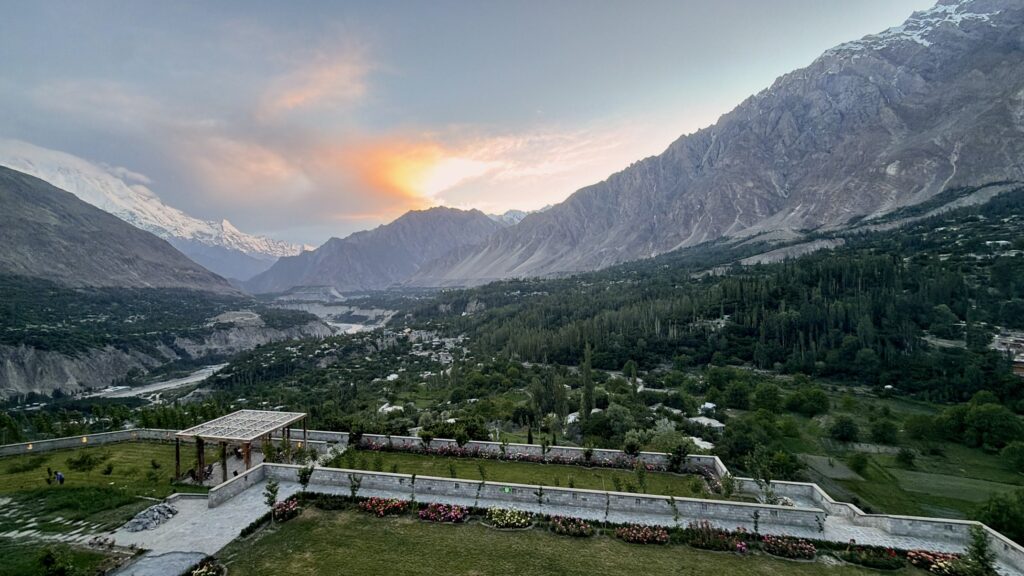
Our original plan included Skardu, Hunza, Azad Kashmir, Murree, Lahore, and Islamabad. But just before we were set to visit Kashmir, unexpected communication blackouts changed everything. Thankfully, Travan had been closely monitoring the situation and made the decision to reroute us to Naran Kaghan instead.
Looking back, this was another reason I was so grateful to be traveling with a local agency. They were aware of changing conditions long before we ever could have been, and they made decisions with our safety at the forefront. It’s the kind of support you don’t fully appreciate until you need it.
I also want to be clear that this trip was not sponsored in any way. We paid for every part of it ourselves. I’m sharing our experience simply because we genuinely loved it and hope others planning a similar trip can benefit from what we learned.
Geography
From the moment we arrived, Pakistan exceeded every expectation we had. Flying into Skardu was an experience in itself, with dramatic mountain peaks stretching as far as we could see. But nothing compared to stepping off the plane and being surrounded by towering, snow-capped mountains. It was one of those moments that instantly takes your breath away and leaves you speechless.
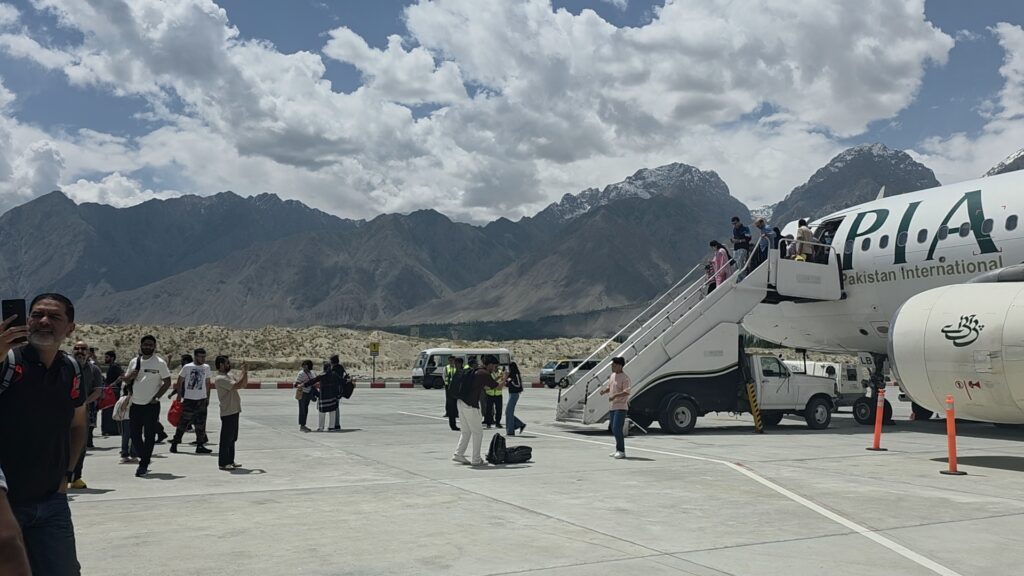
Throughout our journey, we were constantly in awe of Pakistan’s landscapes. From towering mountains and lush meadows to glacial rivers, waterfalls, vast plateaus, and hidden valleys, every turn revealed another scene that was unreal. The beauty here is raw, wild, and unforgettable.
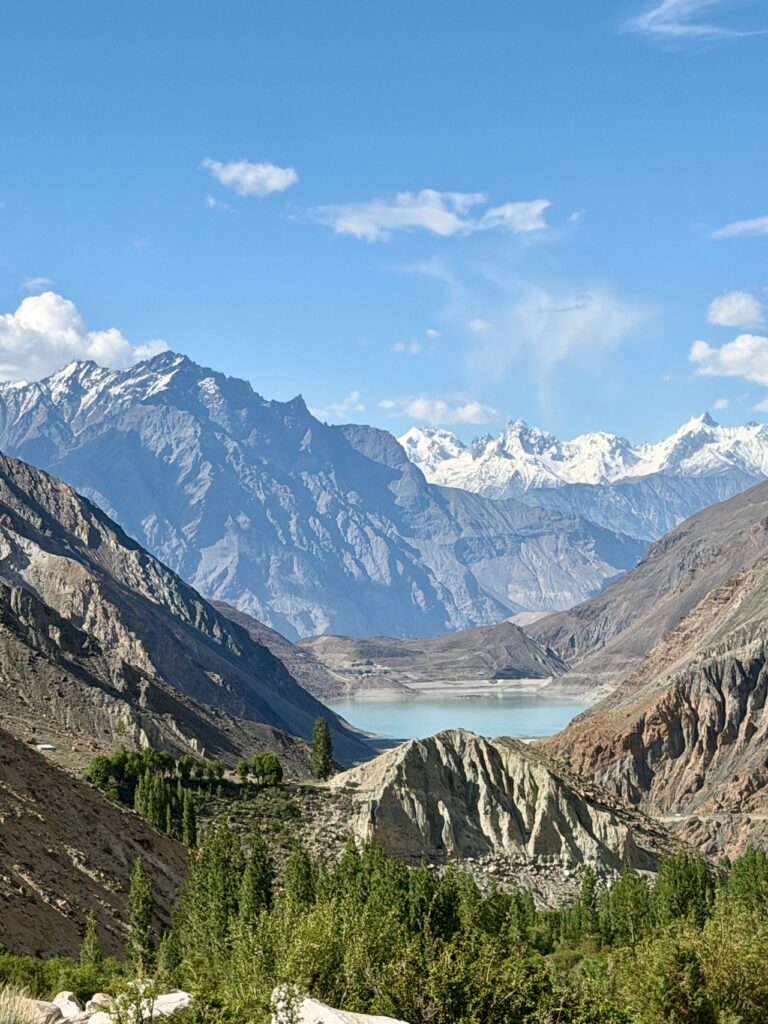
More than anything, being immersed in nature on this scale was deeply humbling. Standing among mountains that have existed for centuries has a way of putting everything into perspective. It reminded us how small we are, how extraordinary God’s creation is, and how powerful our Creator is.
This trip also challenged the way we see the world in ways we weren’t expecting. It made us realize just how deeply many of our ideas about beauty have been shaped by Western ideals. Without even noticing, we’ve often treated Western destinations as the benchmark—for breathtaking landscapes, unforgettable travel experiences, and even great food.
But traveling through Pakistan made us question that. Here was a place so often overlooked, yet home to some of the most breathtaking landscapes we’ve ever seen. Towering mountains, turquoise rivers, endless meadows, and valleys that felt almost untouched. It reminded us that beauty has never belonged to one part of the world.
This isn’t to say places like the Swiss Alps aren’t extraordinary. They absolutely are. But this journey made us ask ourselves why they’ve become the default standard against which everything else is measured. It encouraged us to examine the lens through which we experience the world and to recognize how easily those perspectives can be shaped without us even realizing it.
Local Communities and Infrastructure
One of the experiences that stayed with us long after we left was our visit to KADO (Karakoram Area Development Organization), a local NGO based in Hunza. Our guide arranged for us to meet one of the senior team members, Sultan Bhai, who welcomed us in and shared the organization’s work with us.
As we toured the space, we learned that KADO exists to strengthen the local community from within. They create opportunities for people with disabilities to learn practical skills, provide safe workspaces for both women and men, and help artisans preserve traditional crafts like sewing and embroidery—all with the goal of helping families build sustainable livelihoods and preventing poverty before it takes hold.
At one point, Sultan Bhai mentioned something that we hadn’t noticed: “You won’t see homeless people in Hunza.” As soon as he said it, we realized he was right. It stood in sharp contrast to what we’d seen in cities like Karachi and Lahore. The people here weren’t necessarily wealthy, but there was a deep sense of community responsibility. Rather than waiting for outside help, people had come together to create systems that supported one another and ensured that no one was left behind.
It was an incredibly humbling reminder that lasting change often begins at the community level. We left feeling deeply inspired—not just by the work they were doing, but by the collective mindset that made it possible.
That experience also made the contrasts we witnessed elsewhere in Pakistan even more noticeable.
On our way to Lahore, we stopped at the Khewra Salt Mine, the second largest salt mine in the world (fun fact: Himalayan pink salt is mined exclusively in Pakistan). Despite the mine’s global significance, the surrounding village was strikingly underdeveloped. It was difficult not to wonder how a place that contributes so much to the world could leave so little behind for the community that surrounds it.
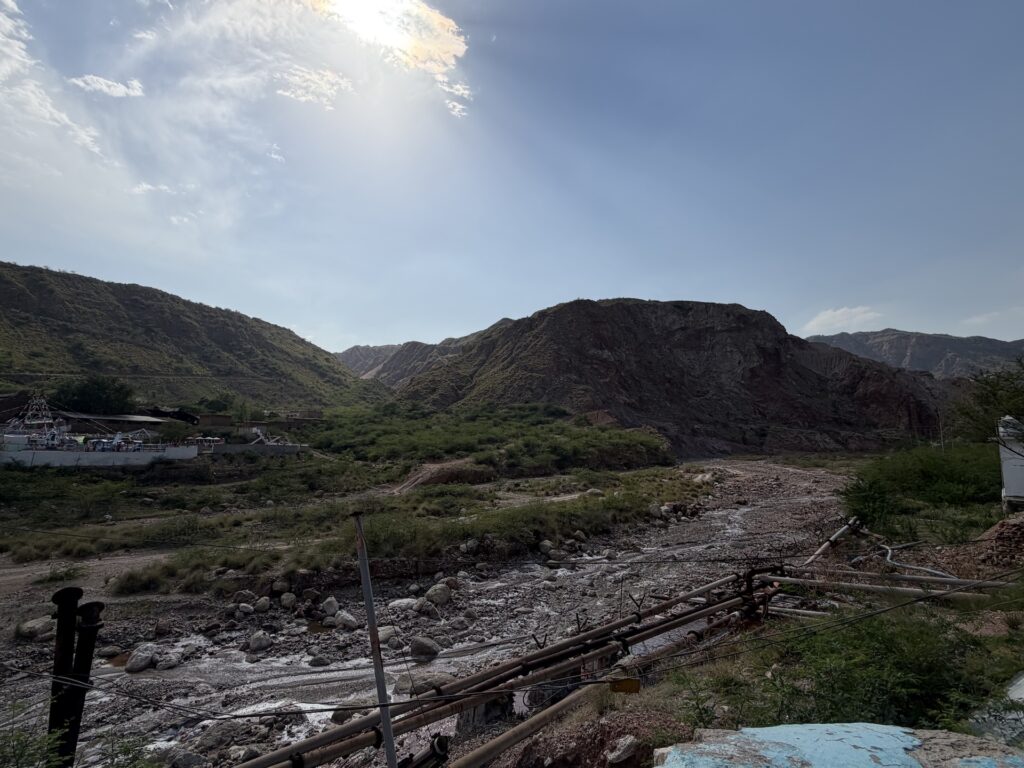
We found ourselves noticing similar contrasts in infrastructure. The highways and road networks in Islamabad and Lahore were some of the best we’d seen in the country. Coming from Karachi, it was encouraging to see that level of investment, but it also highlighted how neglected Karachi has felt by comparison. It was another reminder that Pakistan isn’t one story. Every region has its own realities, challenges, and strengths, and traveling through the country gave us a glimpse into just how complex that picture really is.
Takeaways and Personal Healing
As much as this trip filled us with awe, it also gave us a more honest picture of Pakistan’s realities. Throughout our journey, we met people navigating challenges that many of us take for granted, like access to clean drinking water, reliable electricity, gas shortages, and the rising cost of everyday necessities. It was difficult to witness, especially knowing how much potential this country holds.
Yet what stayed with us wasn’t a sense of hopelessness. It was the people.
Time and time again, we met ordinary Pakistanis quietly doing extraordinary things for the communities around them. It was our guides, who spoke about our homeland with so much pride and genuine love. It was the young people choosing to pursue creative and unconventional paths, even when those choices weren’t the easiest or most celebrated. It was organizations like KADO, and the communities that came together to solve problems themselves—raising funds, sharing resources, and investing in one another rather than waiting for someone else to step in.
This trip reminded us that the future of Pakistan isn’t carried by a handful of well known names. It’s carried by everyday people who continue to show up for their families, their neighbors, and their communities with resilience, generosity, and hope. They are the heartbeat of this country, and we pray that Allah blesses their efforts, places barakah in everything they do, and grants them success in this life and the next.
On a more personal level, this journey brought a kind of healing I didn’t know was needed. As a child of the Pakistani diaspora, I’ve often carried complicated feelings about our homeland—feelings shaped by distance, headlines, and the stories we grew up hearing. Traveling through Pakistan allowed meto replace many of those assumptions with my own experiences. I came home with a deeper appreciation for the country’s beauty, a greater admiration for its people, and a stronger connection to a place that has always been part of who I am.
I left a piece of my heart in Pakistan, and, God willing, I’ll be back soon.
Your journey through Pakistan, especially the magnificent northern areas, looked absolutely extraordinary. The breathtaking mountains, emerald valleys, crystal-clear lakes, and awe-inspiring landscapes showcased the incredible beauty that Allah ﷻ has blessed Pakistan with.
Equally inspiring was the warmth and generosity of the people. Pakistani hospitality is truly exceptional, and your experiences beautifully reflected the kindness, respect, and welcoming spirit that are deeply rooted in its culture. It was wonderful to see your family enjoying the rich traditions, vibrant heritage, and unforgettable moments that make Pakistan so unique.
Thank you for sharing such a memorable journey. Your visit beautifully highlighted not only the unparalleled natural beauty of Pakistan but also the noble character and hospitality of its people. May these cherished memories remain with your family for a lifetime, and may you continue to be blessed with many more meaningful journeys together.
May Allah ﷻ accept your travels, keep your family under His protection, bless you with good health, happiness, and barakah, preserve these beautiful memories, and grant you many more opportunities to explore His magnificent creation in safety and peace. May He shower His endless mercy upon you and your loved ones, and keep you steadfast in faith. Ameen.
Ameen Ameen! Thank you Abu!!
A moment of pride to read this good about our very own Pakistan. And, I’m so much happy that being a part of diaspora, living in foreign country, you loved the time traveling through the different regions and landscape of Pakistan. Stay blessed. Keep coming back.
Salman Bhai, thank you for all of your efforts! Young people like yourself are the ones that will take Pakistan so far! Lots of duas for you my brother!
Having been to some of these places myself as a Pakistani American, yet not being able to articulate all of the wonderful experiences, I truly appreciate this mind-boggling documentation of your trip to one of the most beautiful countries in the world, Pakistan. It was absolutely refreshing and a beautiful reminder that some of the most kind-hearted and humble people in the world also live in Pakistan. My direct experience was with my Pathan brothers who sometimes get a bad rep from some of the folks that live in other parts of Pakistan. I’ve always known them to be hardworking, humble, intelligent, God-fearing and psychologically secure in themselves. May Allah (swt) bless them, bless all of the people living in Pakistan, and allow them to help change the situation in Pakistan for the better. May Allah (swt) forgive me if I have been disrespectful to anyone in this post. It was not my intention and may Allah (swt) grant me hidayah. JazaakAllah khair for such a beautiful post and am glad you and your family were able to enjoy this trip. May Allah (swt) continue to bless you and your family. Aameen.
P.S. I was not aware of the fun fact you mentioned about the salt. Wow! SubhaanAllah! Thank you!
Salam Haseeb! It’s so good to see you here 🙂 Ameen to your beautiful duas!
Henna, this was a beautiful reflection! I completely understand and felt the exact same way a few years back. Ammi, my Phuppo, a cousin we dragged along, and I traveled to the northern areas of Pakistan (I think we went to Muzaffarabad, Shogran, Kalam, Bahrain, and maybe a few smaller towns along the way) back in 2019, right as the world was shutting down due to Covid, and it truly was such a special trip to be able to see the beauty and riches Pakistan has to offer. Before that trip, the only Pakistan I had seen was Karachi and Islamabad, in addition to all the negative news coverage we’re always bombarded with, so like you said, I came away with a much different understanding and appreciation of Pakistan.
I would love to go back and explore more (our time was really limited so we couldn’t see all we wanted to) and I’m trying to convince Hussein as well. That’s the side of Pakistan I really want to show him and I think it’s something he can hopefully appreciate as well.